FanDuel
Flex Parlay
Near miss. No more.
Overview
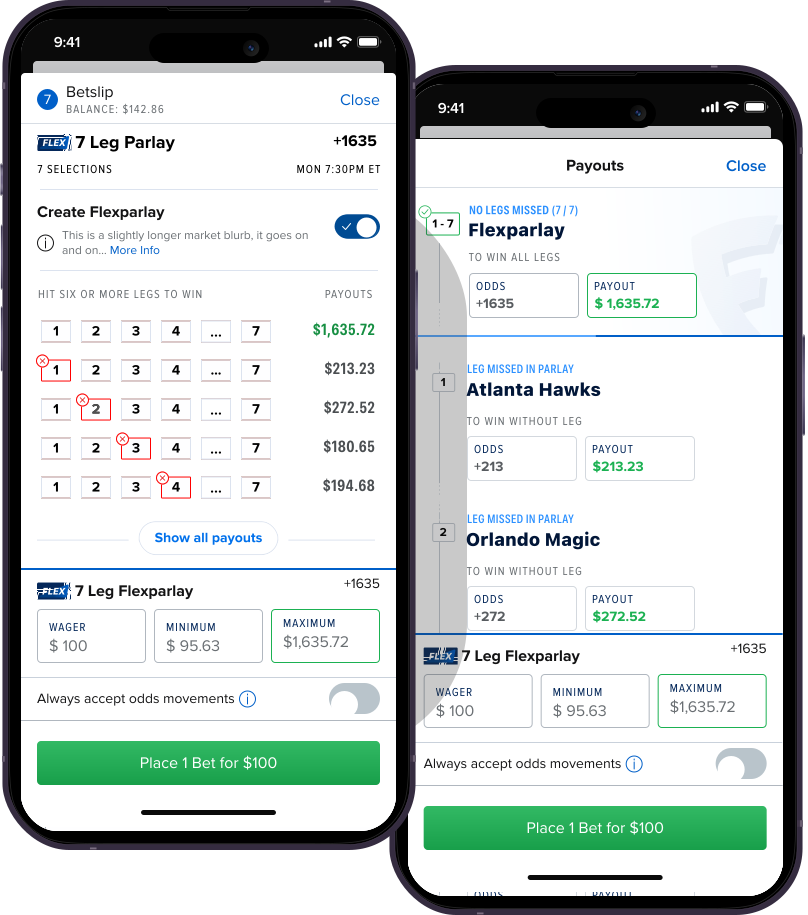
We wanted to give customers the ability to select a Flex Parlay — a simplified round robin / parlay insurance — where the user can still win “some” money even if all the legs don't hit.
If 4/5 legs hit, users win a fraction of the maximum amount and so on. This is a new way for customers to engage in parlays while giving customers another variety and option.
Role
- Lead UX Designer
Tools
- Figma
Team
- 1 UX Designer
- 1 Product Owner
- 1 UX Researcher
Timeline
- March – May 2024
Goal
Give users a more dynamic form of parlay insurance — a user can still win a predefined payout even if they miss a leg.
We hoped to increase engagement metrics for our prepackaged parlays — effectively bolstering an already reliable source of revenue with minimal overhead.
Process
UI Design
We were faced with a variety of constraints when designing the interface for this feature. I had to craft the UI so it could effectively communicate what a FlexParlay was and how it worked, while:
Displaying changes to parlay structure and payout
Due to our Betslip experience which drastically limited the amount of real-estate available.
Layering information within the experience — in context
To avoid overloading the user with new components on the screen.
Educating users
As to what FlexParlay was and how to use it — qualifying bets and eligibility.
UX Research & Findings
I prototyped the experience, defined our goals with our researcher, and sent it out to users to gather feedback. The most common feeling expressed when discussing placing a Flex Parlay was one of safety — with several users referring to the feature as a “safety net.”
Key Findings
With Flex Parlay as an option, a user feels empowered to take greater risks when placing a parlay — including choosing a leg with longer odds, or even trying a new kind of bet they wouldn't normally partake in.
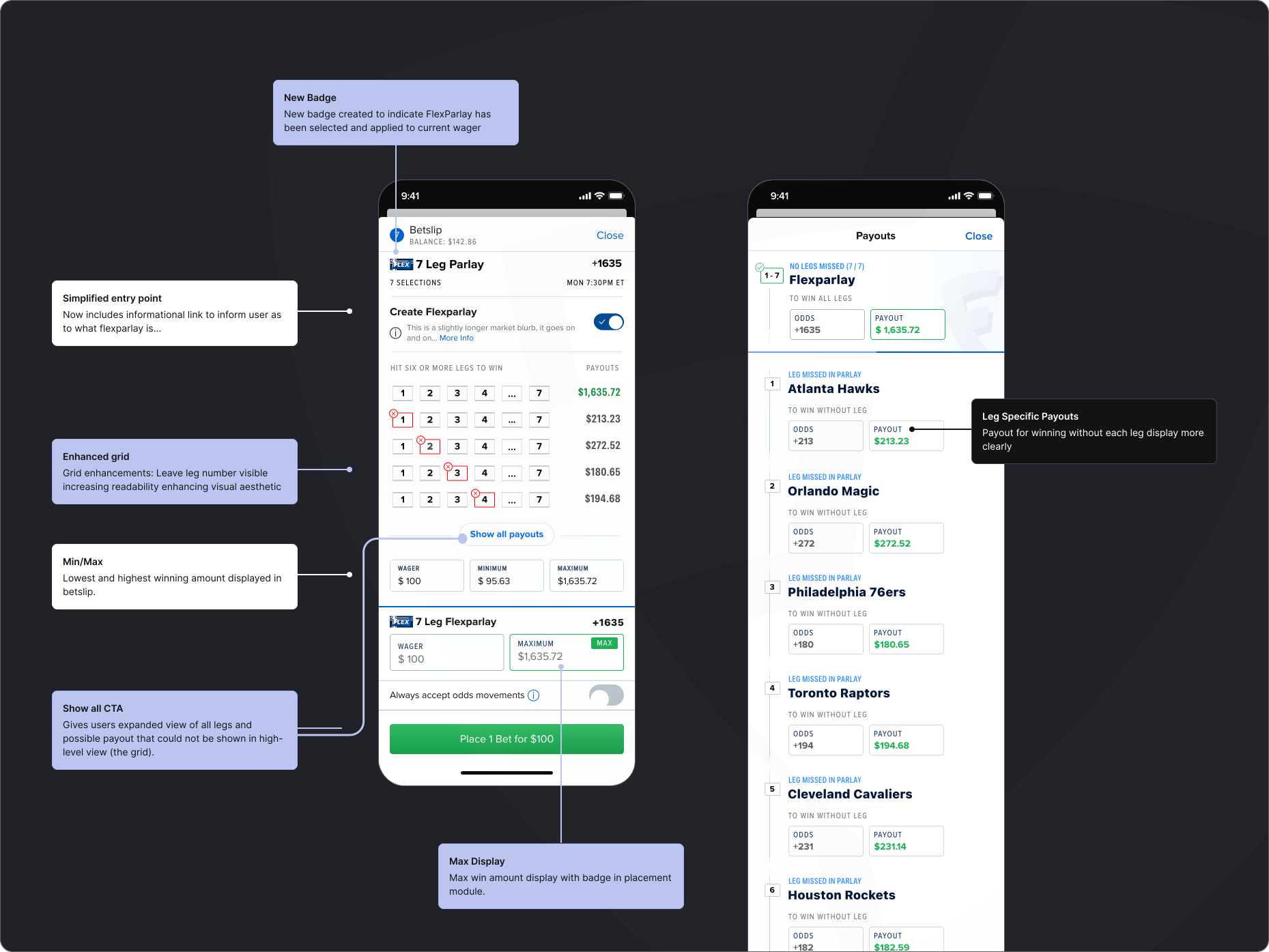
Interview participants were able to recognize what the payout grid graphic was displaying and that the numbers represented individual legs of the parlay.
Every user that participated was able to understand the graphic either immediately or within a few seconds.
Every participant knew to click “show all payouts” to display the remaining legs of the parlay.
Participants want the clarity of being able to manipulate the parlay's odds using the Flex Parlay feature.
User Onboarding
To introduce and promote the new functionality, we identified the need for an onboarding experience to familiarize users with FlexParlay. The final designs included two approaches — one optimized for delight, one for feasibility.
The most fun
An animated, delightful intro designed to hook users on first encounter.
The most feasible
A streamlined flow that could be shipped quickly within existing constraints.
Data-driven Improvements
Moving on to version two — research findings directly shaped the enhanced UI, refining how payout information was displayed and how users activated the feature.
Final Design
Conclusion
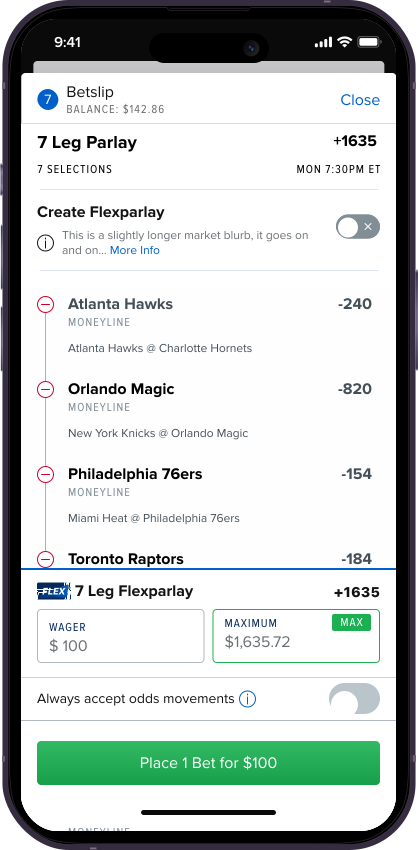
At this time FlexParlay remains in our backlog — so stay tuned for findings once we go live with this new feature!
“Thank you for reading my case study!”
Want to work together? Feel free to reach out or connect on LinkedIn.